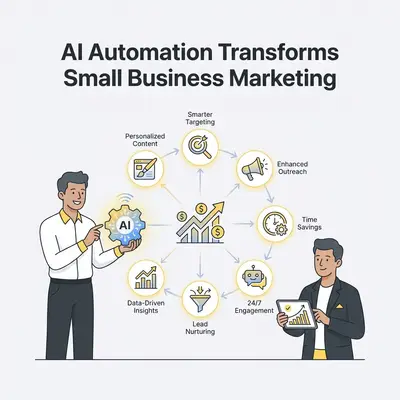
AI automation is the use of software and machine learning to perform repetitive marketing tasks without human intervention. For small businesses, it acts as a force multiplier. It handles data-heavy workflows, allowing your team to focus on high-level strategy rather than manual execution. By integrating these tools, you achieve enterprise-level consistency and real-time engagement.
How Does AI Automation Change the Marketing Landscape for Small Businesses?
AI automation transforms marketing by replacing manual, error-prone tasks with precise, data-driven workflows. Small teams often struggle with limited bandwidth, but AI allows you to scale operations without hiring more staff. According to McKinsey, companies investing in AI across marketing and sales see a 10% to 20% uplift in sales ROI. By automating routine processes, you ensure your brand remains active and relevant 24/7.
How Can AI Personalize Email Marketing at Scale?
AI-driven email automation sends hyper-personalized content to thousands of subscribers based on their unique behavior. Instead of generic blasts, AI analyzes purchase history and browsing patterns to trigger relevant messages. This approach significantly increases open rates and conversion metrics compared to traditional, static email campaigns.
Quick Win: Start by setting up a simple "abandoned cart" email flow using tools like Mailchimp or Klaviyo. This single automation often recovers 10-15% of lost sales.
Why Is AI-Powered Content Creation a Game Changer?
AI tools generate high-quality blog posts, social media captions, and ad copy in seconds, drastically reducing production time. While human oversight remains essential for brand voice, AI eliminates "blank page" syndrome. This allows small businesses to maintain a consistent publishing schedule that boosts SEO and audience engagement.
![_ [GRAPH] Column chart. Manual Content Creation - 15 Hours/Week. AI-Assisted Creation - 3 Hours/Week. Chart title: Weekly Time Spent on Content Production at top. Alt text: Column chart showing a 12-hour reduction in weekly content production time when using AI tools](/blogs/automation_benefits_small/-graph-column-chart-manual-content-creation-15-hou-400w.webp)
How Does AI Optimize Social Media Scheduling and Engagement?
AI automation tools analyze your audience’s activity patterns to determine the exact moments they are most likely to engage. By automating the posting schedule and using AI chatbots to handle initial inquiries, you ensure your brand remains responsive around the clock. This consistency builds trust and keeps your business top-of-mind for potential customers.
What Role Does AI Play in Predictive Customer Analytics?
Predictive analytics uses historical data to forecast future customer behavior, such as identifying which leads are most likely to convert. For small businesses, this means moving from reactive marketing to proactive strategy. You can allocate your limited budget toward the highest-ROI opportunities rather than guessing what might work.
Key Insight: Predictive analytics earns its place when it changes where the budget goes. If the model cannot tell you which segment to stop spending on, it is a dashboard, not a decision tool.
How Can AI Improve Paid Advertising Performance?
AI-driven ad platforms automatically adjust bids, target audiences, and creative assets in real-time to maximize your return on ad spend (ROAS). By continuously testing thousands of variations, AI identifies winning combinations that human marketers might miss. This ensures your advertising budget is never wasted on underperforming campaigns.
| Feature | Manual Ad Management | AI-Automated Management |
|---|---|---|
| Bid Adjustments | Periodic/Manual | Real-time/Continuous |
| Audience Targeting | Static segments | Dynamic/Predictive |
| Creative Testing | Limited A/B testing | Thousands of variations |
| Budget Allocation | Fixed | Optimized for ROI |
Why Should You Use AI for Lead Scoring and Nurturing?
AI automates the process of qualifying leads by assigning scores based on engagement levels and demographic fit. This ensures your sales team only spends time on high-intent prospects. Lower-intent leads are automatically nurtured through personalized drip campaigns until they are ready to purchase, preventing valuable leads from falling through the cracks.
How Does AI Enhance Customer Retention Through Sentiment Analysis?
AI tools monitor customer reviews, social media mentions, and support tickets to gauge brand sentiment in real-time. By identifying dissatisfied customers before they churn, you can trigger automated recovery workflows. Sending a personalized discount code or a direct outreach message can turn a negative experience into long-term loyalty.
Pro Tip: Start by automating one channel—like email—before scaling your AI efforts across your entire marketing stack. This prevents workflow overwhelm.
Practical Next Steps
To begin your automation journey, audit your current marketing tasks to identify the most repetitive ones. Choose one high-impact area, such as email nurturing or social media scheduling, and implement a single tool like n8n or Make to connect your existing platforms. Once that workflow is stable, move to the next. Focus on building a system that saves you time today so you can invest that time into your business growth tomorrow.