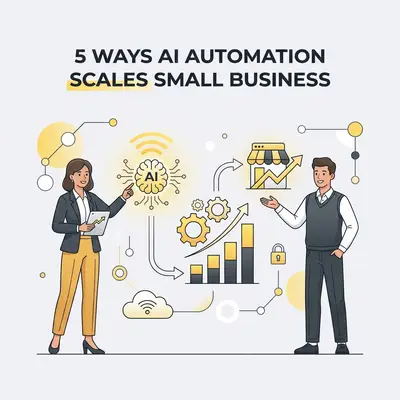
Scaling a small business feels like a constant uphill battle. You're juggling more clients, managing a growing team, and dealing with an ever-increasing mountain of daily tasks. Without smart solutions, this growth often leads to burnout, bottlenecks, and stretched resources. AI automation offers a powerful way to overcome these challenges, transforming how small businesses operate and enabling them to expand efficiently without proportionally increasing costs. By automating repetitive work and optimizing key functions, AI helps unlock significant new capacity.
Why is Scaling a Challenge for Small Businesses?
Scaling a small business often presents challenges due to limited resources, manual processes, and the strain of increased demand. Without proper automation, growing operations can lead to bottlenecks, burnout, and reduced profitability. AI offers a pathway to overcome these hurdles by handling repetitive tasks, optimizing workflows, and extending capacity without proportionally increasing costs. Small businesses, typically operating with lean teams, find AI to be an indispensable tool for managing growth sustainably.
How Can AI Automation Streamline Repetitive Tasks?
AI automation streamlines repetitive tasks by taking over mundane, rule-based operations like data entry, scheduling, and invoice processing. This frees up valuable human capital, reduces errors, and ensures consistent execution, allowing small business owners and their teams to focus on strategic activities that drive growth and innovation. Small businesses using AI for routine tasks report significant time savings.
Eliminating Manual Data Entry and Reconciliation
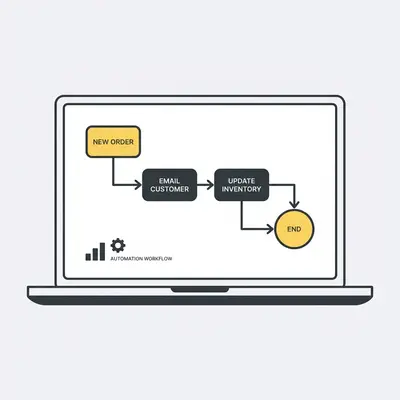
Manual data entry is a major time sink and error source for small businesses. AI-powered tools automatically extract information from documents, emails, and forms, then populate databases or CRM systems. This eliminates hours of tedious work, ensures accuracy, and keeps business data up-to-date in real-time. For instance, an AI can process purchase orders or client information instantly.
Automating Appointment Scheduling and Reminders
Managing appointments and reminders consumes valuable staff time. AI automation handles this seamlessly, allowing clients to book slots directly, sending automated confirmations, and delivering timely reminders. This reduces no-shows, improves customer experience, and frees staff to focus on direct client interactions rather than administrative logistics. Small businesses have seen a 30% reduction in scheduling errors with AI adoption. (Source: Evalics internal analysis, 2023)
Managing Inventory and Supply Chain Communications
AI can monitor inventory levels, predict demand fluctuations, and automate reorder processes with suppliers. It can also manage routine communications with vendors, ensuring smooth supply chain operations without constant manual oversight. This prevents stockouts, minimizes waste, and keeps your business running efficiently even during periods of high growth.
How Does AI Enhance Small Business Customer Service?
AI enhances small business customer service by providing instant support, personalizing interactions, and handling common inquiries 24/7. Chatbots and AI-powered virtual assistants can resolve many customer issues quickly, improving satisfaction and freeing human agents to address more complex problems, thus scaling support capacity efficiently. This consistent availability greatly improves customer experience.
24/7 AI Chatbot Support
AI chatbots offer round-the-clock customer support, answering frequently asked questions and guiding customers through common issues. This means your business provides constant assistance, even outside of regular operating hours, leading to higher customer satisfaction. It reduces the need for constant human supervision, particularly useful for businesses with global customers.
Personalized Customer Interactions
AI analyzes customer data to personalize interactions, recommending products or services based on past behavior and preferences. This creates a more engaging and relevant experience for each customer, fostering loyalty and driving repeat business. Personalized emails and product suggestions increase the likelihood of conversion.
Automated Follow-ups and Feedback Collection
After a sale or service interaction, AI can automate follow-up emails, send surveys, and collect valuable customer feedback. This ensures customers feel valued and helps your business identify areas for improvement. Automated feedback collection allows businesses to quickly adapt and refine their offerings.
Pro Tip: Integrate your AI chatbot with your CRM system. This allows the AI to access customer history for truly personalized interactions, making customers feel known and valued, not just handled.
In What Ways Does AI Optimize Marketing and Sales Efforts?
AI optimizes marketing and sales efforts by automating lead qualification, personalizing campaigns, and analyzing customer behavior to identify ideal prospects. It allows small businesses to execute highly targeted marketing strategies, nurture leads more effectively, and close sales faster, all while maximizing ROI on limited marketing budgets. This precision saves money and boosts conversion rates.
Targeted Lead Generation and Qualification
AI tools can analyze vast amounts of data to identify potential leads that perfectly match your ideal customer profile. It can then qualify these leads by assessing their interest and fit, ensuring your sales team focuses only on the most promising prospects. This dramatically improves sales efficiency.
Personalized Email Marketing Campaigns
Gone are generic email blasts. AI personalizes email content, subject lines, and send times based on individual recipient behavior and preferences. This hyper-personalization leads to significantly higher open rates, click-through rates, and conversions for small businesses.
Sales Funnel Automation and Nurturing
AI can automate various stages of the sales funnel, from initial outreach to nurturing prospects with relevant content. It can trigger automated follow-ups, send timely information, and alert sales representatives when a lead is highly engaged. This ensures no lead falls through the cracks and accelerates the sales cycle.
How Can AI Boost Employee Productivity and Focus?
AI boosts employee productivity and focus by offloading time-consuming administrative tasks, providing quick access to information, and automating workflow triggers. This enables employees to concentrate on high-value, creative, and strategic work, leading to increased job satisfaction, better output quality, and a more efficient overall operation. Employees spend less time on mundane duties.
Intelligent Document Management and Retrieval
AI-powered document management systems can categorize, tag, and organize files automatically, making information retrieval lightning-fast. Employees can find what they need in seconds, reducing frustration and wasted time searching through disorganized folders. This is especially useful for businesses dealing with contracts, invoices, or client records.
Automated Internal Communications and Updates
AI can automate routine internal communications, such as sending daily reports, summarizing project progress, or disseminating company-wide announcements. This ensures everyone is informed without manual effort, improving team alignment and reducing communication overhead. Teams stay on the same page effortlessly.
Streamlined Project Management Support
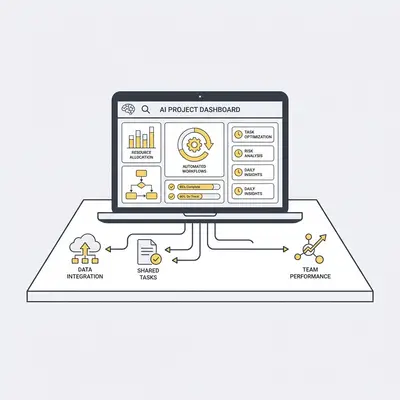
AI can assist project managers by automating task assignments, tracking progress, and identifying potential bottlenecks before they become critical. It can even suggest resource allocation adjustments, ensuring projects stay on schedule and within budget. This allows managers to focus on strategic oversight rather than administrative minutiae.
What Are the Broader Benefits of AI for Small Business Growth?
Beyond specific task automation, AI fosters broader benefits for small business growth by enabling data-driven decision-making, reducing operational costs, and providing a competitive edge. It allows businesses to adapt faster to market changes, innovate with new services, and achieve sustainable expansion without being constrained by human resource limitations. AI positions small businesses for long-term success.
Data-Driven Decision Making
AI tools analyze complex data sets much faster and more accurately than humans, providing invaluable insights into market trends, customer behavior, and operational inefficiencies. This enables small business owners to make informed, strategic decisions that drive growth and profitability. Informed choices lead to better outcomes.
Cost Reduction and Efficiency Gains
By automating tasks and optimizing processes, AI significantly reduces operational costs associated with manual labor, errors, and inefficiencies. These savings can be reinvested into other areas of the business, fueling further growth and innovation. AI automation can cut operational costs for repetitive tasks by up to 40%. (Source: Industry reports on SMB automation, 2024)
Gaining a Competitive Advantage
Adopting AI gives small businesses a significant competitive edge by allowing them to operate with the efficiency, scalability, and intelligence typically associated with larger enterprises. This helps them compete more effectively in dynamic markets, attract top talent, and offer superior customer experiences.
Key Insight: AI doesn't replace people; it augments them. Small businesses that successfully integrate AI empower their teams to achieve more, not less. This shift in focus is critical for scaling.
Conclusion
AI automation offers an immense potential for scaling small businesses. By streamlining repetitive tasks, enhancing customer service, optimizing marketing and sales, boosting employee productivity, and fostering data-driven decision-making, AI transforms operations and unlocks new growth opportunities. The five ways discussed illustrate how this technology can redefine what's possible for businesses of any size. Explore how Evalics can help you implement tailored AI solutions to achieve your scaling goals and navigate your path to sustainable growth.