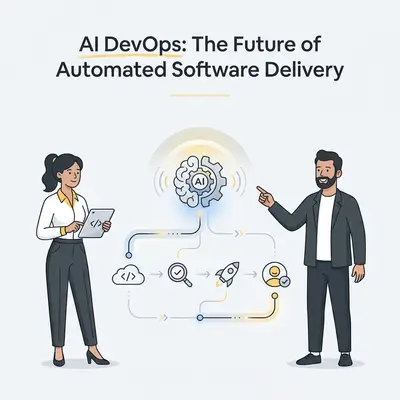
In today's fast-paced digital world, the demand for faster, more reliable software delivery is relentless. Businesses need to innovate at lightning speed, but traditional software development often struggles to keep up. This is where AI DevOps comes in, promising a revolution in how software is built, tested, and deployed.
AI DevOps isn't just a buzzword; it's the strategic integration of artificial intelligence and machine learning into every stage of the DevOps pipeline. The goal? To automate, optimize, and intelligentize the entire software delivery lifecycle, making it faster, more efficient, and more robust.
What Exactly is AI DevOps?
At its core, AI DevOps is about using AI to make better, faster decisions throughout the software development and operations process. Think of it as DevOps with a brain. While traditional DevOps focuses on continuous integration, delivery, and automation through scripting and tools, AI DevOps elevates this by adding predictive capabilities, intelligent decision-making, and self-optimization.
It's crucial to differentiate AI DevOps from related terms:
- AIOps (Artificial Intelligence for IT Operations): This is a subset of AI DevOps, specifically focusing on using AI for monitoring, incident management, and predicting operational issues. It helps IT teams make sense of massive amounts of operational data to prevent outages.
- MLOps (Machine Learning Operations): This discipline focuses on deploying and managing machine learning models in production. While MLOps uses DevOps principles for ML, AI DevOps applies AI across the entire software delivery process, including the development and testing of non-ML software.
AI DevOps acts as an overarching strategy that leverages AI to enhance every aspect of your software delivery, making your pipelines smarter, not just faster.
Why AI DevOps? The Core Benefits for Your Business
For small and medium-sized businesses (SMBs), the advantages of AI DevOps can be transformative, helping them compete with larger enterprises.
- Accelerated Software Delivery: AI can predict bottlenecks, automate repetitive tasks, and streamline workflows, drastically cutting down time-to-market for new features and products.
- Improved Code Quality & Reliability: AI-driven analysis tools can identify bugs, vulnerabilities, and code smells that human reviewers might miss, leading to higher quality software with fewer defects.
- Reduced Operational Costs: By predicting potential issues and automating maintenance tasks, AI minimizes downtime and the need for reactive, costly fixes.
- Enhanced Security: AI can continuously monitor for anomalies and potential threats, identifying vulnerabilities in code or infrastructure before they can be exploited.
- Optimal Resource Utilization: AI helps allocate resources more efficiently, whether it's assigning testers to critical modules or optimizing cloud infrastructure for specific workloads.
- Empowered Human Teams: By offloading repetitive and analytical tasks to AI, your engineers can focus on innovation, complex problem-solving, and strategic initiatives.
Key Insight: AI DevOps isn't about replacing humans, but about augmenting their capabilities. It frees up your skilled team members to focus on creativity and complex challenges, while AI handles the grunt work and predictive analysis.
Key Pillars of AI DevOps
Integrating AI into the DevOps pipeline touches virtually every phase. Here's a look at the critical areas:
1. Intelligent Planning & Design
AI can assist at the very beginning of the software lifecycle, ensuring better foundations.
- Requirements Analysis: AI tools can analyze user stories and specifications to identify ambiguities, inconsistencies, or potential conflicts, leading to clearer requirements.
- Architecture Validation: AI can review proposed architectural designs against best practices and predict potential performance issues or scalability challenges.
- Project Estimation: Machine learning models can analyze historical project data to provide more accurate estimates for timelines and resource needs.
2. AI-Enhanced Development
During coding, AI acts as an intelligent co-pilot.
- Code Generation & Suggestions: AI-powered IDEs (Integrated Development Environments) can suggest code snippets, complete functions, or even generate entire boilerplate code based on context.
- Smart Code Review: AI tools can perform static code analysis, identifying potential bugs, security vulnerabilities, or performance issues in real-time, significantly faster than manual review.
- Automated Refactoring: AI can suggest and even execute code refactoring to improve readability, maintainability, and efficiency.
Example: A small development team working on a new web application can use AI-powered code assistants like GitHub Copilot or equivalent open-source tools to accelerate development. This allows them to generate common functions, database queries, or UI components quickly, reducing coding time by up to 20-30%.
3. Automated Testing & Quality Assurance
This is one of the most impactful areas for AI in DevOps, ensuring higher quality software.
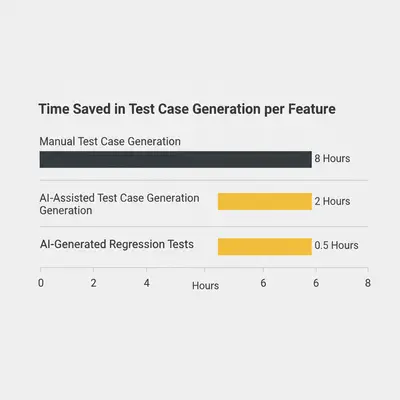
- Intelligent Test Case Generation: AI can analyze code changes, historical defect data, and usage patterns to automatically generate optimal test cases, focusing on high-risk areas.
- Predictive Defect Detection: Machine learning models can predict which modules are most likely to contain defects based on complexity, change frequency, and developer history, allowing testers to prioritize their efforts.
- Automated Bug Triaging: AI can analyze bug reports, categorize them, and even suggest potential fixes or assign them to the most relevant developers.
- Performance Anomaly Detection: During continuous testing, AI can identify unusual performance patterns that indicate emerging problems, even before they become critical.
4. Smart Deployment & Release Management
AI can make deployments smoother and less risky.
- Predictive Conflict Resolution: AI can analyze dependencies and potential conflicts in deployment packages, predicting and even resolving issues before deployment.
- Optimized Release Schedules: Based on historical data and current system load, AI can recommend the best time to release new software to minimize user impact.
- Rollback Automation: In case of deployment failures, AI can identify the root cause faster and trigger automated rollbacks to a stable state.
5. Proactive Monitoring & Operations (AIOps)
This is where AI truly shines in preventing problems before they impact users.
- Anomaly Detection: AI constantly monitors system logs, metrics, and network traffic, identifying unusual patterns that might signal an impending outage or security breach.
- Predictive Maintenance: Machine learning models can forecast hardware failures or resource exhaustion, allowing teams to take proactive measures.
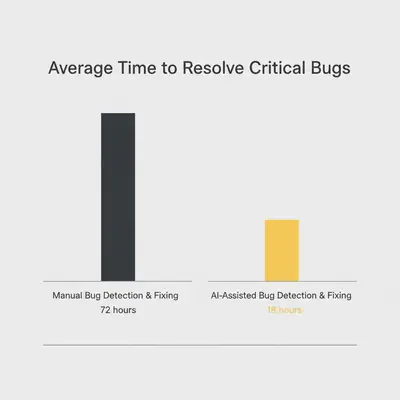
- Root Cause Analysis: When an incident occurs, AI can rapidly analyze vast amounts of data to pinpoint the exact root cause, dramatically reducing mean time to resolution (MTTR).
- Automated Incident Response: For common issues, AI can trigger automated remediation scripts or alerts, sometimes resolving problems without human intervention.
6. Continuous Feedback & Optimization
AI helps close the loop, making sure lessons learned are applied.
- User Feedback Analysis: AI can process and categorize vast amounts of user feedback (e.g., app store reviews, support tickets) to identify common pain points and feature requests, guiding future development.
- Performance Optimization: By analyzing production data, AI can suggest code or infrastructure changes to improve application performance and user experience.
- Pipeline Optimization: AI can identify inefficiencies in the CI/CD pipeline itself, suggesting improvements to tools, steps, or resource allocation.
Implementing AI DevOps: A Roadmap for SMBs
Adopting AI DevOps doesn't mean overhauling everything at once. SMBs can take a phased approach.
- Identify Pain Points: Start by pinpointing the most time-consuming, error-prone, or costly areas in your current DevOps pipeline. Is it slow testing? Frequent production bugs? Manual code reviews?
- Start Small with Focused AI Tools: Instead of an entire AI platform, integrate specific AI-powered tools that address your identified pain points. Examples include AI code assistants, intelligent test case generators, or AI-powered log analysis tools.
- Ensure Data Quality: AI models are only as good as the data they're trained on. Make sure you have clean, relevant, and sufficient historical data from your existing DevOps tools (e.g., build logs, test results, incident reports).
- Integrate Incrementally: Connect new AI tools with your existing CI/CD pipelines (e.g., GitHub Actions, GitLab CI/CD, Jenkins). Many modern AI tools offer straightforward API integrations.
- Monitor, Learn, and Iterate: Continuously monitor the performance of your AI tools. Are they actually saving time or catching more bugs? Gather feedback from your team and fine-tune your approach.
- Upskill Your Team: Invest in training for your developers and operations staff to understand how to work with and leverage AI tools effectively.
Pro Tip: Look for AI-as-a-Service (AIaaS) solutions or features integrated into existing DevOps platforms. This lowers the entry barrier for SMBs, allowing you to leverage AI without needing deep in-house AI expertise. Many tools now have AI features baked in, like AI code suggestions in development environments or smart alerts in monitoring platforms.
Challenges and Considerations
While powerful, AI DevOps isn't without its hurdles.
- Data Quality and Availability: AI models require large volumes of high-quality data. Many organizations struggle with fragmented or insufficient data to train effective models.
- Skill Gap: Implementing and managing AI-driven systems requires expertise in both AI/ML and DevOps, a combination that is often hard to find.
- Tooling Complexity and Integration: The landscape of AI and DevOps tools is vast and evolving. Integrating these diverse tools into a cohesive pipeline can be complex.
- Ethical Implications & Bias: AI models can inherit biases from their training data, leading to unfair or incorrect decisions in areas like hiring or resource allocation. This requires careful monitoring and mitigation.
- Over-reliance on AI: While AI augments human capabilities, over-reliance without human oversight can lead to unforeseen issues or a lack of understanding when things go wrong.
Reality Check: Don't expect AI DevOps to be a magic bullet that solves all your problems overnight. It requires careful planning, iterative implementation, and a commitment to continuous learning and adaptation. Start with clearly defined problems where AI can provide a measurable impact.
Real-World Examples for SMBs
Let's look at how smaller businesses can apply AI DevOps principles:
- Small E-commerce Site: A 10-person e-commerce team struggles with slow performance during peak sales. They integrate an AI-driven performance testing tool that automatically identifies performance bottlenecks by analyzing user traffic patterns and code changes, recommending optimizations for database queries and caching strategies. This prevents costly outages during Black Friday.
- SaaS Startup: A startup building a new project management SaaS product faces a high rate of bugs reported by early users. They implement AI-powered static code analysis and intelligent test case generation in their CI/CD pipeline. The AI identifies potential logic errors and security vulnerabilities before code is even committed, and generates targeted test cases for new features, reducing their defect rate by 40%.
- Content Agency: A digital content agency that also develops custom tools for clients experiences delays due to lengthy code reviews. They adopt an AI code review assistant that flags stylistic inconsistencies, potential bugs, and common anti-patterns in pull requests. This speeds up code review cycles by 50%, allowing their developers to merge code faster and focus on feature development.
The Future of AI DevOps
The trajectory for AI DevOps is clear: it will become increasingly sophisticated and integrated. We can expect:
- More Autonomous Pipelines: AI will evolve beyond mere assistance to making more autonomous decisions in deployment, scaling, and self-healing.
- Hyper-Personalized Development Environments: AI will tailor development tools and workflows to individual developer preferences and project needs.
- Enhanced Security Posture: AI will continuously learn and adapt to new threats, making software delivery pipelines more resilient to cyberattacks.
- Predictive Insights Everywhere: From predicting the success of a feature before release to forecasting infrastructure costs, AI will provide deeper insights across the board.
AI DevOps is not just an evolution of practices; it's a fundamental shift towards a more intelligent, adaptive, and efficient way to build and deliver software.
Conclusion
AI DevOps is poised to redefine software delivery, offering unprecedented levels of automation, intelligence, and efficiency. For businesses looking to accelerate innovation, improve quality, and stay competitive, embracing AI in their DevOps strategy is no longer optional—it's essential. By starting small, focusing on clear pain points, and fostering a culture of continuous learning, even SMBs can harness the power of AI to transform their software development lifecycle.
Ready to explore how AI DevOps can supercharge your software delivery? Don't let your competitors get ahead.
Book a demo with Evalics to see how intelligent automation can be tailored for your business needs.
By Kevin Michael Schindler, AI Automation Expert at Evalics
Related Resources
- The True Cost of AI Automation in 2025: Beyond the Hype
- Understanding AI Model Context Windows: A Key to Cost & Performance
- Building vs. Buying AI Solutions: When to Build Custom vs. Buy Off-the-Shelf
Official Sources & Further Reading
- IBM: What is AIOps?
- Microsoft Azure: What is MLOps?
- Atlassian: What is DevOps?
- GitLab: Guide to AI in DevOps