Simon Willison recently dropped Release: datasette-llm 0.1a3, and it is a massive signal for anyone serious about business automation. If you have been following my work at Evalics, you know I am obsessed with moving AI beyond the "chat window" phase. This update bridges the gap between raw, structured database exploration and the reasoning capabilities of LLMs.
For years, business owners have treated their databases like digital filing cabinets—static, dusty, and hard to access. Willison’s work changes that. It turns your database into a conversation partner. This isn't just a technical update; it is the beginning of a shift toward "data-aware" automation where your AI actually understands the specific, messy reality of your company’s operations.
What Does the Datasette-LLM Integration Mean for SMBs?
The integration of LLMs directly into database interfaces allows you to query your own operational data using natural language. You no longer need to be a SQL wizard or wait for a developer to pull a report. You can simply ask your database, "Which customers haven't ordered in 90 days?" and get an immediate, accurate answer.
- Bridging the Gap: We are moving away from static spreadsheets that go out of date the moment you save them. Now, your database becomes a dynamic, AI-queryable asset.
- Operational Efficiency: You stop wasting hours on manual reporting. When the AI can retrieve the data, your team can focus on the strategy that follows the data.
- Data-Driven Decision Making: You can finally ask "why" and "how" regarding your sales, inventory, or customer behavior without needing a data science degree.
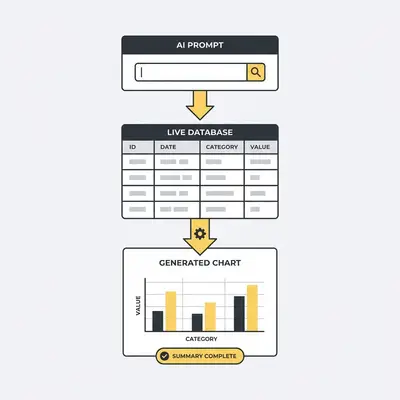
Key Insight: The most valuable AI isn't the one that writes poetry; it’s the one that knows exactly how many units of SKU-402 you have left in the warehouse right now.
How Is AI Automation Changing Small Business Data Strategy?
AI automation is evolving from simple, task-based bots into intelligent systems with "contextual awareness." By using tools like datasette-llm, you build an internal knowledge base that updates in real-time. Your AI is no longer guessing based on generic internet training; it is grounded in your actual company performance.
- Contextual Accuracy: Hallucinations happen when AI lacks context. By grounding the model in your specific database, you force it to stick to the facts of your business.
- Scalability: As your business grows, your data complexity grows with it. AI-driven retrieval allows you to scale your insights without needing to hire a massive data team.
- Integration Potential: Once your database is "chat-ready," you can connect it to broader automation workflows in tools like n8n, triggering actions based on the insights the AI uncovers.
Reality Check: If your data is a mess, your AI will be a mess. You cannot automate your way out of poor record-keeping.
What Are the Implications of "Data-Aware" AI for Your Workflow?
Adopting data-aware AI makes your business processes resilient and responsive. Instead of relying on gut feeling, you can automate the monitoring of your key performance indicators (KPIs). You can set the AI to watch for specific thresholds—like a dip in sales or a spike in support tickets—and have it alert you or suggest a fix before you even notice the problem.
- Proactive Management: Use AI to spot trends before they become crises. It’s the difference between reacting to a bad month and preventing one.
- Customized Reporting: Generate bespoke summaries for your stakeholders in seconds. No more manual copy-pasting into PowerPoint.
- Workflow Optimization: Identify bottlenecks in your operations through automated analysis. If the data shows a delay in shipping, the AI can flag it immediately.
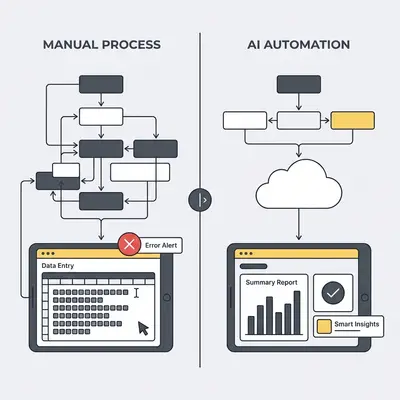
Pro Tip: Start by automating the "boring" reports you run every Monday morning. If you can define the logic, you can automate the retrieval.
How Can You Prepare Your Data for AI Integration?
Preparing your data for AI requires cleaning your records and ensuring they are structured for machine interpretation. You need to audit your current sources, remove duplicates, and standardize your formats. If your data is fragmented across five different apps, the AI will struggle to give you a coherent picture.
- Data Hygiene: The "garbage in, garbage out" rule is absolute. Spend the time to clean your inputs now so your AI outputs are reliable later.
- Security Considerations: Protect your sensitive customer information. Use tools that allow for local processing or secure, private API connections to keep your data within your control.
- Tool Selection: Choose database architectures that support future scaling. You want a system that can grow as your AI capabilities mature.
Quick Win: Run a "data audit" this week. Identify the three most important tables in your business and ensure they are properly labeled and free of duplicate entries.
Source
Original reporting on the latest release: Release: datasette-llm 0.1a3