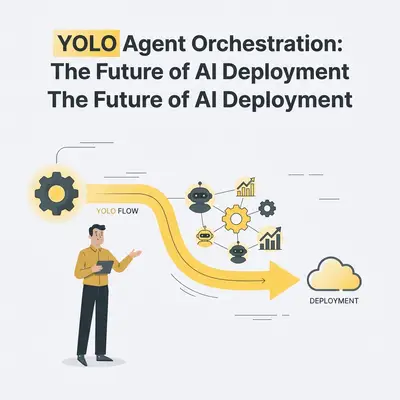
Google recently unveiled Scion, an experimental multi-agent orchestration testbed, as reported by InfoQ. This post reacts to the release of Google Open Sources Experimental Multi-Agent Orchestration Testbed Scion, which functions as a "hypervisor for agents" to manage concurrent, isolated AI workflows.
Scion represents a massive shift from monolithic AI tools to a "YOLO" (You Only Live Once/Orchestrate) approach. In this model, specialized agents operate in isolated containers rather than being forced into a single, bloated prompt. For business owners, this signals a move away from rigid, single-purpose AI toward dynamic, multi-agent ecosystems that can handle complex, parallel business tasks without constant human intervention.
What Is the Shift Toward Multi-Agent Orchestration?
Multi-agent orchestration is the transition from using a single AI chatbot to deploying a network of specialized, autonomous agents that collaborate to complete complex business workflows. Instead of one AI trying to do everything—from writing emails to analyzing spreadsheets—orchestration allows distinct agents to handle coding, auditing, and task management simultaneously.
- From Monoliths to Micro-Agents: We are moving away from "all-in-one" tools that struggle with context windows. Instead, we use small, focused agents that do one thing perfectly.
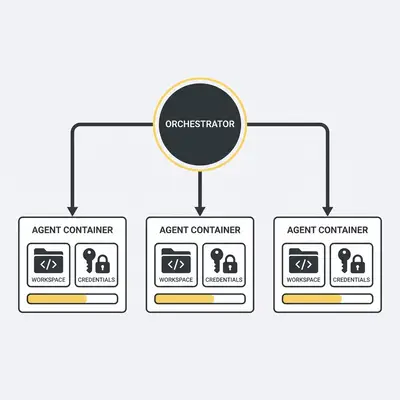
- The Hypervisor Concept: By treating agents like virtual machines, we ensure that one agent’s error or hallucination doesn't crash the entire business process.
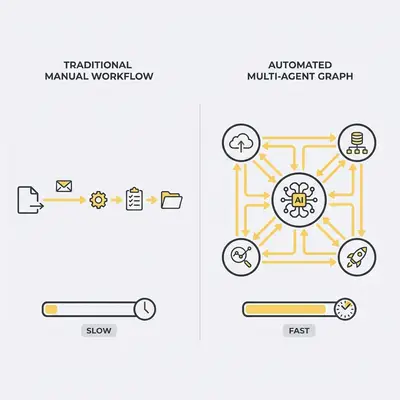
- Parallel Execution: Why wait for a linear process to finish? Orchestration allows your digital workforce to tackle three different business goals at once, drastically increasing throughput.
Key Insight: The most successful AI implementations I see in the field aren't the ones with the "smartest" single model. They are the ones with the best orchestration layer that keeps specialized agents from tripping over each other.
Why Does "Isolation Over Constraints" Matter for Small Businesses?
Isolation over constraints means giving AI agents the freedom to operate in their own secure environments rather than forcing them into a rigid, pre-defined workflow. For SMBs, this prevents "agent drift," where one AI’s output corrupts another’s, ensuring that specialized tasks remain accurate and secure.
- Security and Credentials: Each agent holds only the permissions it needs. If an agent is compromised, it doesn't have the keys to your entire kingdom.
- Reduced Conflict: Agents work in separate git worktrees or workspaces. They don't overwrite each other's progress because they aren't sharing the same "desk."
- Scalability: Adding new capabilities is as simple as spinning up a new container. You don't have to re-engineer your entire system to add a new AI capability.
Pro Tip: Think of your business like a digital office. You wouldn't want your accountant, your web developer, and your customer support rep sharing the same desk and computer. Scion gives every AI "employee" their own private office.
How Will Multi-Agent Systems Change SMB Operations?
Multi-agent systems will automate the "connective tissue" of small businesses, linking disparate tasks like lead generation, CRM updates, and email follow-ups into a single, self-evolving graph. This reduces the need for manual oversight and allows business owners to focus on strategy rather than execution.
- Dynamic Task Evolution: Agents that adapt to changing business goals in real-time. If a lead doesn't respond, the agent doesn't just stop; it pivots to a different follow-up strategy.
- Ephemeral vs. Long-lived Agents: You can use specialized agents for one-off tasks—like summarizing a single meeting—while keeping long-lived agents running for permanent infrastructure tasks like monitoring your inbox.
- Cross-Platform Execution: You can run agents locally on your own hardware for sensitive data or in the cloud for heavy lifting, depending on your specific compute needs.
Reality Check: Don't fall for the hype that you need to build your own Kubernetes cluster to get value here. Start by identifying the three most repetitive tasks in your business and see if they can be handled by separate, specialized agents.
What Are the Implications for AI Deployment Strategies?
The emergence of tools like Scion suggests that the future of AI deployment is modular, containerized, and highly distributed. SMBs must prepare for a world where they manage a "fleet" of agents rather than a single subscription, requiring a shift in how they evaluate and integrate AI software.
- The Build vs. Buy Dilemma: You will increasingly buy the "harness" or the "orchestrator" and build the specific agents that know your business processes.
- Infrastructure Requirements: You need to understand that AI is no longer just a web app. It is becoming a piece of infrastructure that requires container-ready environments.
- The Role of the Human-in-the-Loop: Your job is shifting from "doing the work" to "orchestrating the agents." You are the manager of a digital workforce.
Quick Win: The goal isn't to replace your team; it's to build a digital workforce that handles the repetitive, high-volume tasks that keep your business from scaling. Start by documenting your SOPs—if you can't write it down, an agent can't do it.
Source
Original reporting: Google Open Sources Experimental Multi-Agent Orchestration Testbed Scion