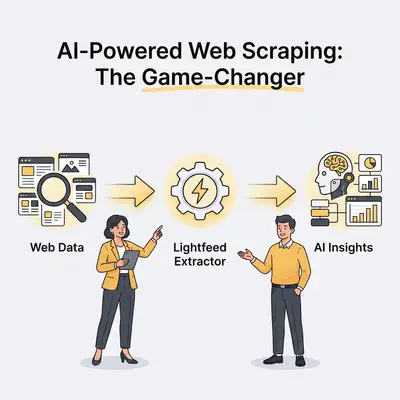
A new tool just dropped that genuinely changes the game for web data extraction, and I had to talk about it. It’s an open-source library called GitHub - lightfeed/extractor: Using LLMs and AI browser automation to robustly extract web data. I see a lot of new AI tools, but this one stands out because it directly solves the biggest headaches my clients face with web scraping.
For years, pulling data from websites has been a brittle, high-maintenance process. Lightfeed's Extractor uses large language models (LLMs) and browser automation to let you pull structured data using plain English. This isn't just a minor improvement. It’s a fundamental shift away from fragile code that breaks every time a website updates its design.
This tool makes gathering business intelligence more accessible and reliable. It’s a big deal for any business that relies on web data for competitive analysis, lead generation, or market research.
What are the current challenges in web data extraction?
Most small businesses I work with know they should be using public web data. They want to track competitor pricing or find new sales leads. But the technical hurdles are often too high.
Traditional scraping tools are complex and require constant upkeep. Websites change their code, and the scraper you paid a developer to build last month suddenly stops working. On top of that, sites are getting smarter about blocking automated traffic. This makes reliable data collection a constant, expensive battle.
How do traditional scraping methods fall short?
The old way of scraping relies on finding specific signposts in a website's code, like CSS selectors or XPaths. Think of it like giving a robot directions: "Go to the third paragraph, find the second link, and copy the text." This works perfectly until the website owner decides to redesign the page.
When that happens, the signposts move, and your robot gets lost. The scraper breaks. This fragility means you spend more time fixing your tools than using the data they provide. For a small business without a dedicated tech team, this is a nightmare.
What impact do anti-bot measures have?
Websites don't like being scraped. They use tools like CAPTCHAs, IP address blocking, and other clever tricks to detect and block automated bots. For a business trying to gather legitimate competitive intelligence, these roadblocks can stop a project dead in its tracks.
Getting around them requires advanced workarounds like rotating proxy servers and using special "headless" browsers that mimic human behavior. This is often too complex and costly for a small business to manage effectively.
How does AI-powered web scraping address these challenges?
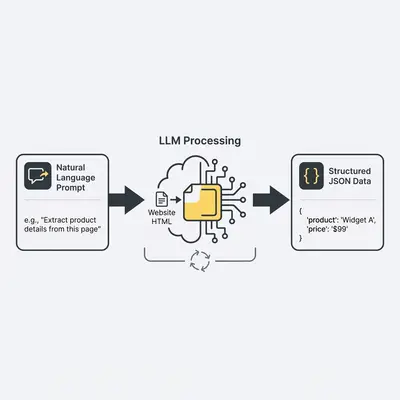
AI-powered scraping, like the approach Lightfeed's Extractor uses, is a completely different way of thinking. Instead of giving the robot rigid, step-by-step directions, you tell it what you're looking for in plain English. The AI uses an LLM to understand the page's content and context, just like a person would.
This makes the whole process incredibly resilient. If a website changes its layout, the AI can still find the "price" or the "product name" because it understands the meaning, not just the code structure. It dramatically lowers the technical barrier and makes scraping far more robust.
Key Insight: The shift from selector-based scraping to LLM-based extraction is about moving from 'finding patterns' to 'understanding meaning'. This is why it's so much more resilient to website changes.
What role do LLMs play in robust data extraction?
LLMs are the "brain" of the operation. They can look at a webpage's content and identify the exact information you need based on your prompt. For example, you can ask it to find all products on a page and extract their name, brand, price, and review count into a structured format.
The LLM understands context. It knows that "$19.99" next to a product image is the price. This ability to interpret information makes it incredibly powerful. It also means the system can handle messy data and even recover malformed code, ensuring you get clean, usable results.
How does browser automation enhance AI scraping?
Browser automation tools like Playwright are the "hands" of the operation. They allow the AI to control a real web browser, just like a person. It can click buttons, fill out forms, scroll down to load more content, and navigate between pages.
This is critical for modern websites that rely on JavaScript to display information. When you combine browser automation with an LLM, the AI can "see" the page, interact with it, and then intelligently extract the data you need. This is how it gets past the limitations of older scraping methods.
What are the key features of Lightfeed's Extractor?
I was impressed by a few features in this library that are clearly built by people who have been in the trenches. They address the real-world problems that turn scraping projects into failures. For a small business, these features mean the difference between a tool that works and one that just causes frustration.
How does stealth browser automation benefit data collection?
Lightfeed's Extractor comes with built-in features to avoid being detected as a bot. This "stealth mode" is crucial for reliability. It means you can collect data consistently without being blocked or served fake information.
For a business, this translates to dependable data pipelines. You can trust that your competitor price tracker will run every day without you having to manually intervene and solve CAPTCHAs.
Pro Tip: Start with a single, high-value data source. Instead of trying to scrape ten competitors at once, focus on getting clean, reliable pricing data from your biggest rival first. Master one before expanding.
Why is LLM-ready markdown conversion important?
Webpage HTML is messy. It's full of ads, navigation menus, and formatting code that an LLM doesn't need to see. Feeding all that junk to an AI is inefficient and can lead to inaccurate results.
This tool cleans the HTML and converts it into a simple markdown format first. It strips out the noise and focuses only on the main content. This not only improves the accuracy of the data extraction but also saves you money on API calls by using fewer tokens.
What are the implications for small business growth?
Tools like this democratize data. AI-powered web scraping gives small businesses access to the same kind of market intelligence that was once only available to large corporations with big budgets. This levels the playing field.
It allows you to make smarter, data-driven decisions about your products, pricing, and marketing. You can stop guessing and start operating based on what the market is actually doing.
How can you leverage extracted data for a competitive advantage?
The use cases are endless. You can automatically track every price change your competitors make and adjust your own strategy in real-time. You can scrape industry forums to find potential customers complaining about a problem your product solves.
You can analyze thousands of customer reviews to identify market gaps or product improvement ideas. This kind of data provides a massive competitive edge, allowing you to be more agile and responsive than your larger, slower-moving rivals.
What new opportunities does this technology create?
This opens the door to sophisticated strategies that were previously out of reach. Imagine building a system that automatically finds new sales leads from online directories and enriches them with company data. Or a system that monitors industry news and alerts you to new market trends before anyone else.
AI-powered data extraction empowers small businesses to build these kinds of powerful, automated workflows. It allows you to operate with a level of intelligence and efficiency that can fuel serious growth.