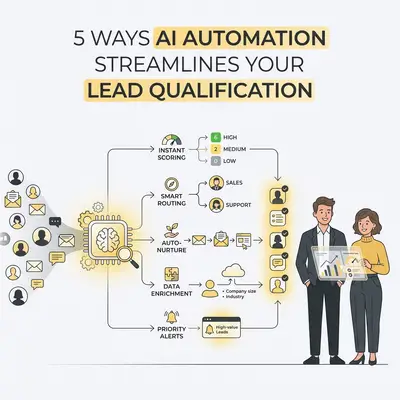
AI lead qualification is the process of using automated software to identify, score, and prioritize potential customers based on their likelihood to purchase. By replacing manual data entry with intelligent workflows, small businesses can stop chasing cold leads and focus exclusively on prospects ready to sign a contract.
Manual lead qualification drains your team’s time by forcing them to chase unqualified prospects instead of closing high-intent deals. Relying on manual follow-ups often leads to missed opportunities, as prospects frequently choose the first company to respond.
![_ [GRAPH] Column chart. Manual Qualification - 40%. AI-Automated Qualification - 85%. Chart title: Lead Conversion Rate Comparison at top. Alt text: Column chart showing that AI-automated lead qualification results in an 85% conversion rate compared to 40% with manual methods](/blogs/streamline_lead_qualification/-graph-column-chart-manual-qualification-40-aiauto-400w.webp)
How does AI-powered lead scoring prioritize your best prospects?
AI-powered lead scoring uses machine learning to analyze historical data and identify which leads are most likely to convert based on behavior and demographics. Instead of treating every lead equally, the system assigns a numerical value to each prospect. This ensures your sales team focuses their energy only on the leads ready to buy.
- Pros: Eliminates guesswork, increases conversion rates, and optimizes sales team productivity.
- Cons: Requires initial historical data to train the model effectively.
Pro Tip: Start by assigning points to high-intent actions, such as visiting your pricing page or requesting a demo, to identify your "hot" leads immediately.
How can automated chatbots qualify leads in real-time?
Automated chatbots act as 24/7 digital receptionists that engage website visitors, ask qualifying questions, and capture contact information instantly. By integrating these bots with your CRM, you ensure that every interaction is logged. Qualified leads are then automatically routed to the right sales representative without any manual intervention from your staff.
- Pros: Immediate response times, 24/7 availability, and consistent lead data collection.
- Cons: Can feel impersonal if not programmed with a conversational, brand-aligned tone.
Why should you use automated email nurturing sequences?
Automated email nurturing sequences deliver personalized content to leads based on their specific interests and stage in the buying journey. By using AI to trigger emails based on user actions—like downloading a whitepaper or visiting a pricing page—you keep your brand top-of-mind without needing to manually send follow-up messages.
- Pros: Scalable communication, higher engagement rates, and automated brand authority building.
- Cons: Requires high-quality content creation to remain effective over time.
Key Insight: Personalized email sequences can boost click-through rates by 14% and conversions by 10% compared to generic, one-size-fits-all blasts.
How does CRM integration streamline your data management?
CRM integration connects your lead generation tools directly to your database, ensuring that lead information is updated, cleaned, and categorized automatically. This eliminates the need for manual data entry, reduces human error, and provides a single source of truth for your sales team to track the entire customer lifecycle.
- Pros: Real-time data accuracy, seamless team collaboration, and improved reporting capabilities.
- Cons: Requires initial setup time to map fields between different software platforms.
How can predictive analytics forecast your future sales pipeline?
Predictive analytics tools analyze current lead trends to forecast future revenue and identify potential bottlenecks in your sales process. By understanding which marketing channels produce the highest quality leads, you can reallocate your budget toward the strategies that actually drive growth, rather than wasting money on low-performing campaigns.
- Pros: Data-driven decision-making, better budget allocation, and proactive pipeline management.
- Cons: Accuracy depends heavily on the quality and volume of data being analyzed.
Reality Check: Predictive analytics is not a crystal ball. It works best when you have at least six months of consistent sales data to feed the model.
Next Steps for Your Business
To begin streamlining your lead qualification, audit your current intake process. Identify the most repetitive task—such as manual data entry or initial email follow-ups—and automate that single workflow first. Once that is stable, integrate your CRM with a chatbot or scoring tool to handle the next layer of your funnel.
If you need help mapping your current workflow or selecting the right tools, contact Evalics for a custom automation audit. We help small businesses build systems that save time and increase revenue.