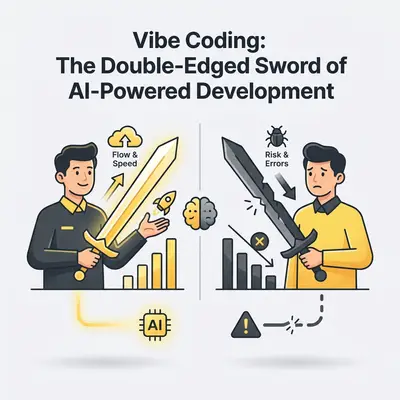
I just read a fascinating post about a developer who built two functional macOS apps almost entirely by talking to an AI. He called it "Vibe coding SwiftUI apps is a lot of fun," and the term is perfect. It’s this idea of using powerful AI models like Claude and GPT to rapidly build software based on a "vibe" or a general idea, without getting bogged down in a traditional development environment.
This isn't just a cool experiment for coders. It’s a flashing sign pointing to where things are headed for small businesses. The ability to create a custom tool from a few simple prompts, in a single text file, is a massive shift. It means the power to build custom solutions is moving out of the exclusive hands of expensive dev teams and into the reach of anyone with a clear idea.
But as the developer himself admits, he’s not qualified to know if the apps are even accurate. That’s the other edge of the sword. This speed and accessibility come with real risks if you don't know what you're doing.
What is "vibe coding" and why does it matter?
"Vibe coding" is building software with AI in a fast, intuitive way. You give the AI a general goal, and it generates the code. You then refine it through conversation, asking for features and changes like you would with a human assistant. It prioritizes speed and getting a working prototype over meticulous, manual coding.
This matters because it dramatically lowers the barrier to creating custom software. For years, if you wanted a tool to solve a specific business problem, you had two choices: find an off-the-shelf product that was a "close enough" fit, or hire a developer for thousands of dollars. Vibe coding presents a third path where you can create a bespoke tool quickly and cheaply.
Reality Check: Vibe coding is great for prototypes and simple internal tools. But for anything that handles sensitive customer data or is critical to your operations, you still need a human expert to review the AI's work for security, accuracy, and reliability.
This trend is accelerating. The AI models are getting better at understanding complex requests and writing clean code. For business owners, this means the ability to automate unique workflows or build simple customer-facing apps is closer than ever.
How are AI tools changing software development for my business?
AI tools are fundamentally changing the economics of building custom software. For my clients, this means they can now tackle problems that were previously too expensive or time-consuming to solve. Instead of spending a month and $10,000 on a small project, they can get a functional version up and running in a few days for a fraction of the cost.
This allows businesses to experiment more. You can test an idea for a new workflow automation, see if it works, and discard it if it doesn't without a major financial loss. This agility is a huge competitive advantage.
The immediate benefits are obvious: faster project timelines, lower development costs, and the ability to create tools perfectly tailored to your processes. I’ve helped a client build a custom lead-scoring tool that integrated with their specific sales process—a project that would have been unthinkable for their budget just two years ago.
But there are serious pitfalls. Relying only on AI without oversight is like building a house without an inspector. The AI might create code that works on the surface but is inefficient, insecure, or impossible for another developer to maintain later. This creates "technical debt" that can cause major headaches down the road.
What are the emerging trends in AI automation?
Beyond just coding, AI is creating new ways to automate business operations. The biggest trends I'm seeing with my clients are hyper-personalization and Intelligent Process Automation (IPA). These aren't just buzzwords; they represent a move from simple, rule-based automation to more dynamic, cognitive automation.
Hyper-personalization uses AI to analyze customer data and tailor every interaction. Instead of sending the same email to 1,000 customers, AI can help you send 1,000 unique versions, each personalized with product recommendations or messaging based on that individual's past behavior. This makes customers feel seen and dramatically boosts engagement.
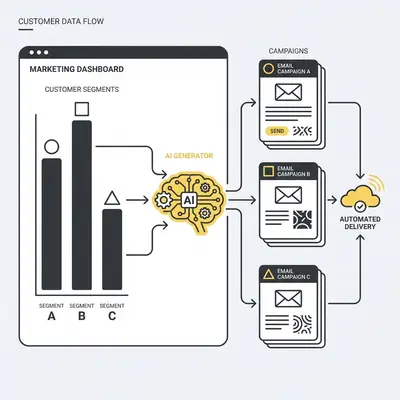
Intelligent Process Automation (IPA) is the next step up from basic automation. It combines AI with traditional automation to handle more complex tasks that require judgment. For example, an IPA system can read an incoming invoice, understand its content, check it against a purchase order, and approve it for payment—all without human intervention. This frees up your team from mind-numbing administrative work.
Pro Tip: Start with one well-defined process for IPA. A great first candidate is accounts payable. Automating invoice processing can save 5-10 hours per week for even a small business and provides a clear, measurable return on investment.
What are the implications for my business operations?
Adopting AI isn't just about plugging in a new tool. It changes how your business operates and what skills your team needs. The biggest implication is the shift from manual execution to strategic oversight. Your team's value is no longer in doing the repetitive task, but in designing, managing, and improving the AI systems that do it.
Integrating AI into your existing workflows should be a gradual process. I always advise clients to start with a small pilot project that addresses a clear pain point. For example, use an AI chatbot to answer the top 10 most common customer questions. This gives you a quick win and helps your team get comfortable with the technology.
This also means you need to invest in new skills. Your team doesn't need to become AI developers, but they do need to develop AI literacy. This includes learning how to write effective prompts (prompt engineering), interpret the data AI provides, and spot when an AI-generated output looks wrong. Critical thinking and problem-solving become more important than ever.
Key Insight: The goal of AI isn't to replace your employees. It's to augment them. A well-implemented AI tool handles the 80% of routine work, freeing up your team to focus on the 20% that requires creativity, strategic thinking, and human connection.
How can I navigate the future of AI automation?
The key to navigating this future is to be strategic and deliberate. Don't adopt AI just because it's trendy. Start with your business goals. What are your biggest bottlenecks? Where are you losing the most time? Use those answers to guide your AI strategy.
You also have to take the ethical considerations seriously. For a small business, this comes down to trust. Are you protecting your customers' data? Are your AI-driven decisions fair and transparent? If you use an AI to screen job applications, for example, you must ensure it isn't biased. Being proactive about ethics isn't just the right thing to do; it protects your brand's reputation.
Finally, commit to continuous learning. The world of AI is changing every month. Create a culture where your team is encouraged to learn about new tools and techniques. This doesn't have to be formal training. It can be as simple as dedicating an hour every Friday for the team to share what they've learned or experiment with a new AI tool. The businesses that thrive will be the ones that learn and adapt the fastest.