Why is AI automation for Commercial Aquaculture essential today?
Aquaculture now provides over 50% of the global supply of seafood for human consumption.
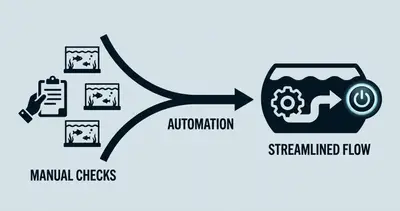
AI automation for Commercial Aquaculture is the process of replacing manual data entry with sensor-driven, real-time monitoring systems. With aquaculture now providing over 50% of the global supply of seafood for human consumption, the pressure to maintain precise environmental conditions is higher than ever. Farm managers currently lose significant time manually logging water quality parameters and feeding schedules across multiple tanks, leading to human error and delayed responses to critical fluctuations.
How do you automate water quality and feeding schedules?
An automated workflow for Commercial Aquaculture connects physical sensors to a centralized dashboard using Python scripts and AWS IoT. When sensors detect a drop in dissolved oxygen or a temperature spike, the system triggers an alert via Make or n8n, simultaneously updating your Power BI dashboard. This ensures that feeding schedules are adjusted dynamically based on real-time water quality data rather than static, manual inputs.
Can n8n bridge the gap between sensors and management?
The n8n platform acts as the central nervous system for your aquaculture data, connecting disparate hardware and software tools into one cohesive pipeline. By using n8n to orchestrate data flow between your AWS IoT environment and your reporting tools, you eliminate the need for manual spreadsheet updates. This creates a reliable, automated audit trail for every tank, ensuring your team always has access to accurate, up-to-the-minute environmental metrics.
Is the high setup complexity worth the operational gain?
Implementing AI automation for Commercial Aquaculture involves high setup complexity due to the need for robust hardware integration and secure data pipelines. You must calibrate sensors, configure AWS IoT endpoints, and write custom Python scripts to handle edge-case data errors. While the initial engineering effort is significant, it creates a stable foundation that prevents the common data silos found in large-scale aquaculture operations.
How much time can you reclaim with automated logging?
Typical time reclaimed when this work is automated: 10–15 hours/week.
Ready to optimize your aquaculture facility with Evalics?
If you are ready to move beyond manual logging and stabilize your production environment, Evalics is here to help. We specialize in building custom automation architectures for aquaculture facilities, helping you navigate the technical hurdles of sensor integration and data management. Contact us today to schedule a free automation audit and see how we can streamline your facility operations.
Further Reading:
- 5 High-Impact AI Automations You Can Build in n8n Under One Hour
- The 80/20 Rule for Business Automation: What to Automate First
Looking for automation guides for other industries? Browse the full AI Automation by Industry directory.