Why is manual order management hurting Custom Furniture Makers?
Small manufacturing businesses save an average of 20% on operational costs through workflow automation.
AI automation for Custom Furniture Makers solves the persistent bottleneck of manual data entry that plagues high-end workshops. When you spend hours transcribing client dimensions, wood species, and hardware preferences from emails into production orders, you lose time that should be spent at the workbench. By implementing intelligent systems, you eliminate the human error that leads to costly material waste and production delays, ensuring your shop runs with precision.
How can you automate client specifications and inventory?
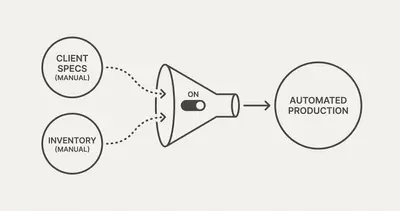
An automated workflow for Custom Furniture Makers captures client specifications directly from intake forms and pushes them into your production queue. Using tools like Make.com and OpenAI, the system parses unstructured client requests into structured data, automatically updating your inventory tracking in Google Sheets or Notion. This ensures that every cut list and material order is accurate before a single board is milled.
Which tools best handle furniture production data?
For Custom Furniture Makers, n8n provides a robust, self-hosted environment to connect disparate tools like Notion and Google Sheets without relying on fragile manual processes. By creating custom logic that triggers when a new order arrives, you ensure that your inventory levels are adjusted in real-time. This level of AI automation for Custom Furniture Makers creates a reliable digital backbone for your workshop, preventing the common oversight of ordering materials for projects that are already behind schedule.
Is the setup effort for automation manageable?
The setup effort for these systems is classified as medium complexity, requiring a clear mapping of your current workshop processes before implementation. While it involves configuring API connections between your existing tools, the process is designed to be modular, allowing you to start with order intake and expand to inventory tracking later. This structured approach ensures that your shop remains operational while the new digital infrastructure is integrated.
How much time can you reclaim with automated workflows?
Small manufacturing businesses save an average of 20% on operational costs through workflow automation, a figure that directly impacts your bottom line. By removing the manual burden of administrative tasks, you can expect to save 6–10 hours per week. This reclaimed time allows you to focus on complex joinery and client consultations rather than chasing down missing order details or updating spreadsheets.
Typical time reclaimed when this work is automated: 6–10 hours/week.
Ready to streamline your workshop operations?
Stop letting administrative overhead dictate your production schedule and start reclaiming your time. Evalics specializes in building custom automation systems for workshops that need to scale without sacrificing quality. Contact us today for a free automation audit to see exactly how much time your shop can save by digitizing your order management process.
Further Reading:
- 5 High-Impact AI Automations You Can Build in n8n Under One Hour
- The 80/20 Rule for Business Automation: What to Automate First
Looking for automation guides for other industries? Browse the full AI Automation by Industry directory.