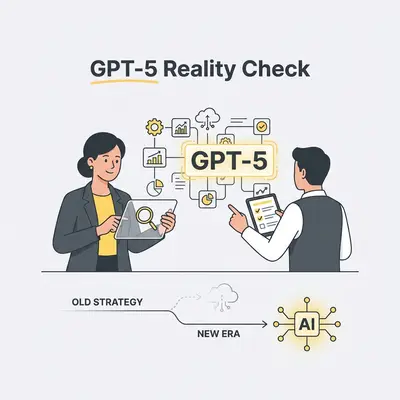
OpenAI recently dropped their latest update, Introducing GPT‑5 for developers, and the industry is already buzzing about the benchmarks. While the headlines focus on coding scores and developer-specific parameters, I’m looking at this through a different lens: what does this actually mean for the business owner who just wants their operations to run smoother?
We’ve moved past the era of "AI as a chatbot." This release confirms that we are firmly in the age of agentic AI. For those of us in the trenches helping businesses deploy these tools, this isn't just a faster model—it’s a fundamental shift in how we build internal systems.
What Does the Shift to "Agentic" AI Mean for Small Businesses?
Agentic AI is the transition from a system that answers your questions to a system that executes your workflows. Think of a chatbot as a digital encyclopedia; think of an agent as a digital employee. For a small business, this means moving away from basic content generation and toward AI that can manage inventory, triage support tickets, or reconcile invoices without you hovering over the keyboard.
The shift is from passive to active. In the past, you’d ask an AI to write an email, and you’d copy-paste it. Now, the agent can draft the email, check your CRM for the client’s history, and send it once it verifies the data. GPT-5’s coding prowess is the secret sauce here. It lowers the barrier to entry for custom automation because the model can now write, debug, and edit the very scripts that connect your disparate software tools.
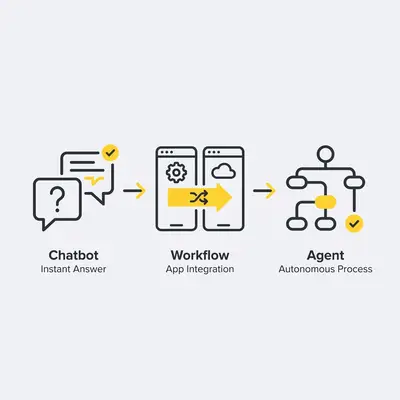
Key Insight: Don't confuse "agentic" with "magic." An agent is only as good as the tools you give it. If your internal data is messy, an agent will just automate the mess faster.
Why Is GPT-5 a Turning Point for Non-Technical Founders?
For years, if you wanted a custom internal tool, you had to hire a developer or spend months learning to code. GPT-5 effectively democratizes this. Because the model is highly steerable and excels at complex codebases, you can use natural language to build bespoke internal tools. You aren't just asking for a summary; you are asking for a functional script that connects your Shopify store to your accounting software.
This reduces your technical debt significantly. Instead of relying on rigid, off-the-shelf SaaS platforms that don't quite fit your process, you can build lightweight, custom solutions that fit your specific workflow. The model’s ability to explain its actions before it executes a tool call is a massive win for trust. You can see the "reasoning" behind why it’s about to update a database, which makes it much easier to audit and approve.
Pro Tip: Use the new "verbosity" parameter in the API to keep your agents concise. You don't need a long-winded explanation for a simple data entry task; set it to "low" to save on latency and cost.
How Should SMBs Update Their AI Strategy in Light of These Trends?
Stop experimenting and start integrating. Most businesses are stuck in a loop of "playing" with AI. To get real ROI, you need to identify the high-friction, repetitive tasks that are now solvable by these agentic models. Your goal is to build a modular automation stack—a set of "pluggable" agents that can handle specific parts of your business.
- Audit Your Workflow: Map out your most time-consuming, rule-based administrative tasks.
- Identify the Bottleneck: Where does work stop because a human has to move data between two apps?
- The Build vs. Buy Pivot: If a task is unique to your business, use an agentic builder. If it’s a commodity task, buy the best-in-class SaaS.
- Start Small: Pick one low-stakes workflow, like email sorting or lead qualification, to test the agent’s reliability.
- Iterate: As models like GPT-5 improve, swap out your older, less capable agents for newer ones.
Reality Check: If you can't explain the process to a human intern, you cannot automate it with an AI agent. Document your SOPs first, then build the agent.
What Are the Risks of Adopting Frontier Models Too Quickly?
The capabilities of GPT-5 are impressive, but they aren't a "set it and forget it" solution. The biggest risk for small businesses is the "black box" nature of agentic decision-making. If an agent makes a mistake in a customer-facing process, it can damage your brand reputation in minutes. You must implement guardrails and human-in-the-loop verification.
Data privacy is another non-negotiable. When you move to an API-based strategy, you need to ensure you are using enterprise-grade settings where your data is not used to train the model. Treat your business data like a proprietary asset—because it is. Even with a model as smart as GPT-5, "steerability" doesn't eliminate the need for oversight. You are the pilot; the AI is the autopilot.
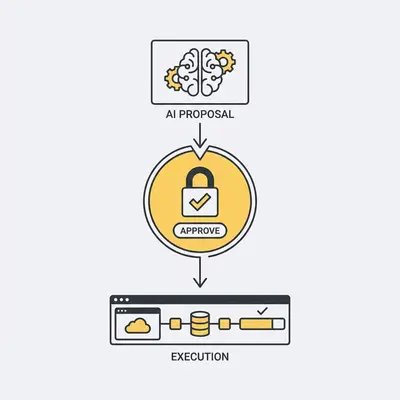
Quick Win: Always include a "human-in-the-loop" step for any action that involves sending money, deleting data, or communicating directly with high-value clients.
Source
Original reporting: Introducing GPT‑5 for developers