OpenAI's Pivot to Open Weights: Why Your AI Strategy Just Changed
OpenAI just dropped gpt-oss. It is a massive shift for enterprise AI. I am breaking down what this means for your deployment strategy and data sovereignty.
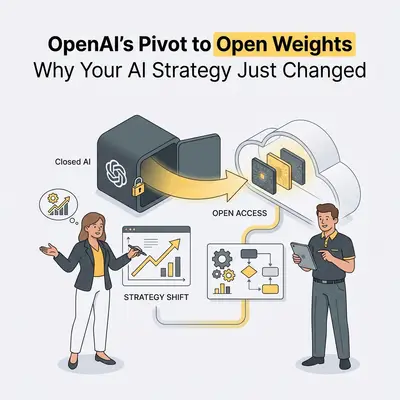
OpenAI just dropped a bombshell that changes the math for every business owner I talk to. They released Introducing gpt-oss, a suite of open-weight models that finally brings frontier-level reasoning to local infrastructure. For years, the industry has been stuck in a "rent-only" model, where you pay a tax to big tech for every single token your business generates.
This release signals a massive shift. We are moving away from the era where you must send your proprietary data to a third-party cloud just to get a decent reasoning engine. By providing models that perform at the level of their proprietary counterparts while running on consumer-grade hardware, OpenAI is effectively handing the keys to the kingdom back to the builders.
What Does the Shift to Open-Weight Models Mean for Small Businesses?
The shift to open-weight models means small businesses can now deploy enterprise-grade AI locally without relying on expensive, third-party API subscriptions. By removing the "black box" of proprietary cloud models, SMBs gain full control over their data privacy, reduce long-term operational costs, and eliminate dependency on external server uptime.
When you rely on an API, you are at the mercy of someone else’s pricing, rate limits, and privacy policies. With these new models, you own the stack.
Data Sovereignty: You keep sensitive customer data, financial records, and internal strategy on-premise. It never leaves your firewall.
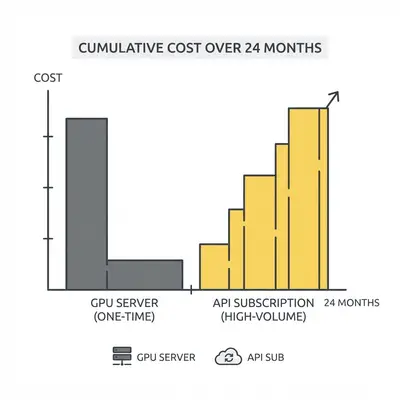
Cost Predictability: You move from variable, unpredictable API costs to fixed hardware investments. Once the server is bought, the cost per token is essentially electricity.
Customization: You can fine-tune these models on your specific niche business workflows, something that is often restricted or prohibitively expensive with closed-source APIs.
Key Insight: Moving to local inference isn't just about saving money; it’s about removing the "vendor lock-in" that prevents you from truly owning your business's intelligence layer.
How Do gpt-oss Models Change the AI Automation Landscape?
These models bridge the gap between massive, inaccessible frontier models and lightweight, underperforming local alternatives. By offering near-parity with proprietary models like o4-mini on a single 80 GB GPU, they allow small businesses to automate complex reasoning tasks—such as supply chain logistics or automated customer support—without sacrificing performance for privacy.
Businesses have long struggled to automate complex tasks locally because smaller, local models were not capable enough to handle the logic. That changes today.
Reasoning Capabilities: You can now leverage Chain of Thought (CoT) for complex decision-making, like analyzing multi-step contracts or troubleshooting technical support tickets.
Tool Use: These models are designed to integrate directly into your local software stacks, allowing them to execute Python code or search internal databases without hitting an external API.
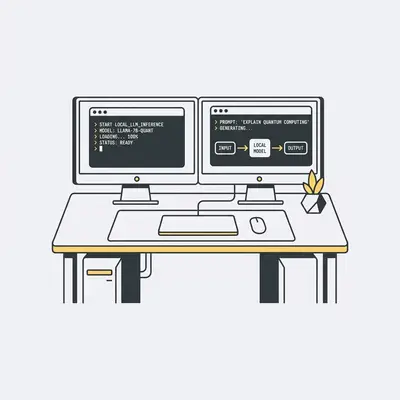
Edge Deployment: The 20b model is a game-changer for edge devices. You can run high-performance AI on standard office hardware, keeping latency near zero.
Reality Check: While these models are powerful, they require a baseline of technical competence to deploy. Don't expect a "plug-and-play" experience; you need a strategy for model management and orchestration.
What Are the Strategic Implications for Your AI Roadmap?
For SMB owners, the primary implication is a move away from "renting" intelligence toward "owning" it. Businesses should now prioritize building internal AI infrastructure that can scale with these open-weight releases, rather than tethering their entire automation strategy to a single vendor’s API pricing and usage policies.
I recommend a three-phase approach to integrating these models into your business:
Phase 1: Audit current API-dependent workflows. Identify which processes are high-volume and data-sensitive. These are your primary candidates for local migration.
Phase 2: Evaluate hardware requirements for local inference. You don't need a supercomputer, but you do need to understand the VRAM requirements for the models you intend to run.
Phase 3: Pilot open-weight models for non-critical internal tasks. Start with internal documentation search or email categorization before moving your customer-facing logic to local hardware.
Pro Tip: Start by running these models in a containerized environment like Docker. It makes scaling and updating your models significantly easier as new versions are released.
How Can You Mitigate the Risks of Self-Hosting AI?
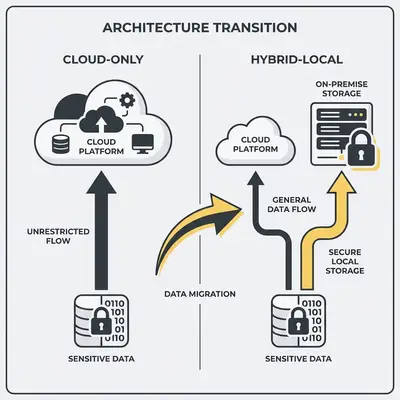
While self-hosting offers control, it introduces the burden of maintenance, security patching, and hardware management. SMBs must balance the benefits of open-weight models with the reality of their internal technical capacity, often requiring a hybrid approach where critical data stays local while non-sensitive tasks remain in the cloud.
You are now the IT department for your AI. This means you are responsible for:
Security: Managing local firewall and access controls. If your model is running locally, you must ensure your internal network is hardened against unauthorized access.
Maintenance: Keeping models updated with the latest open-weight iterations. Unlike an API that updates automatically, you have to manage the deployment lifecycle.
Scalability: Knowing when to transition from local to cloud-bursting. If your local hardware hits a bottleneck during peak hours, you need a fallback plan to route requests to a cloud provider.
Quick Win: If you aren't ready to go 100% local, use a hybrid approach. Keep your most sensitive data on a local instance and use cloud APIs for general-purpose, low-stakes tasks.