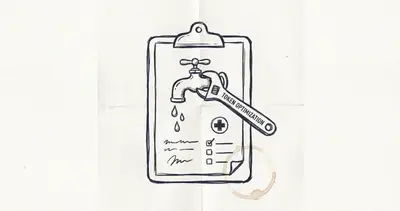
How can hospitals control rising LLM token costs for Healthcare?
Healthcare data volume is growing at a rate of 36% annually, driving up cloud compute costs.
Healthcare data volume is growing at a rate of 36% annually, driving up cloud compute costs for hospitals struggling to manage unstructured patient intake forms and clinical notes. Managing high LLM token costs for Healthcare requires moving away from inefficient, manual API calls toward intelligent, filtered data pipelines that ensure only relevant information reaches your models.
What is the most efficient way to process clinical notes?
To address the high costs associated with processing thousands of unstructured patient intake forms and clinical notes via GPT-4, hospitals should implement a pre-processing layer using LangChain. By filtering out redundant PHI and summarizing clinical data before it hits the OpenAI API, you significantly reduce the token count per request while maintaining strict HIPAA compliance standards.
Why use n8n to manage HIPAA-compliant AI workflows?
n8n provides a self-hosted, HIPAA-compliant automation environment that allows hospital IT teams to orchestrate complex data flows between AWS Bedrock and internal EHR systems. By keeping your automation logic within your own private cloud, you eliminate the security risks of third-party SaaS platforms while gaining granular control over how your LLM token costs for Healthcare are allocated across different departments.
Is the setup complexity worth the infrastructure savings?
While the setup complexity for these automated pipelines is high, it is a necessary investment to prevent runaway cloud spending in a data-heavy environment. Building a robust architecture requires careful mapping of data ingestion points and rigorous testing to ensure that automated summarization does not compromise the clinical accuracy required for patient care. [SAVINGS] By automating the ingestion and categorization of clinical documentation, hospital IT administrators can save 12–15 hours/week of manual data management time. This shift allows your technical staff to focus on high-value infrastructure improvements rather than troubleshooting manual data entry errors or managing bloated cloud bills caused by inefficient AI model usage.
How much time can your IT team save with automation?
Typical time reclaimed when this work is automated: 12–15 hours/week.
Ready to optimize your hospital cloud infrastructure?
Evalics specializes in helping hospital IT departments build secure, cost-effective automation pipelines that scale with your data needs. Contact our team today to schedule a free automation audit and discover how we can help you reduce your cloud infrastructure spend while maintaining full HIPAA compliance.
Further Reading:
- 5 High-Impact AI Automations You Can Build in n8n Under One Hour
- The 80/20 Rule for Business Automation: What to Automate First
Looking for automation guides for other industries? Browse the full AI Automation by Industry directory.