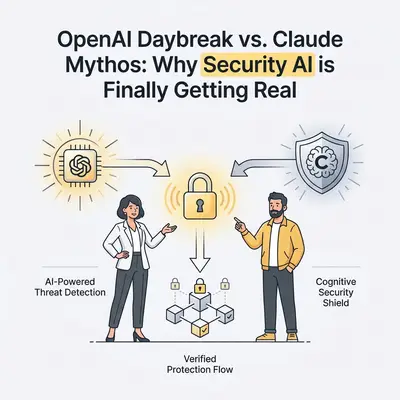
OpenAI has officially entered the security-AI arms race with the launch of Daybreak, a suite of tools designed to automate vulnerability detection and threat modeling. This move signals a massive shift in how we approach digital defense. The recent report from The Verge, "OpenAI just released its answer to Claude Mythos," details how OpenAI is leveraging Codex and specialized GPT-5.5 models to compete with Anthropic’s Project Glasswing.
For those of us in the trenches, this isn't just another model release. It’s a fundamental change in the speed of the cat-and-mouse game between attackers and defenders. By using AI to patch vulnerabilities before they are exploited, businesses can finally move from reactive "firefighting" to proactive defense.
Why Should Small Businesses Care About Security AI?
Security AI is no longer an enterprise-only luxury; it is a necessity for SMBs facing automated cyber threats. Attackers are already using AI to scan for vulnerabilities in real-time, meaning your business is likely being probed by bots every single day. If you aren't using similar tools to defend your perimeter, you are effectively fighting a digital war with analog tools.
By automating threat modeling, you can identify weak points in your code before a bad actor does. This levels the playing field. It allows a small team to do the work that previously required a dedicated, 24/7 security operations center.

Key Insight: Security AI acts as a force multiplier. It doesn't replace your need for good security hygiene, but it does allow you to catch the "low-hanging fruit" that automated bots target first.
What Are the Core Differences Between Daybreak and Mythos?
The landscape is shifting quickly, and choosing the right tool depends on your specific infrastructure needs. Here is how the current heavyweights compare:
| Feature | OpenAI Daybreak | Anthropic Claude Mythos |
|---|---|---|
| Primary Focus | Automated threat modeling & code patching | High-security, restricted-access research |
| Model Base | Codex + GPT-5.5-Cyber | Proprietary Glasswing architecture |
| Accessibility | Enterprise-focused, partner-integrated | Private/Restricted |
| Best For | Continuous code vulnerability scanning | High-stakes, sensitive environment security |
How Do You Choose the Right Security Automation Strategy?
Choosing the right security automation depends on your technical debt and internal resources. Don't just chase the newest model; look for tools that integrate directly into your existing workflows. If a tool requires a team of PhDs to operate, it’s not the right fit for your SMB.
- Audit your current tech stack: Identify which platforms hold your most sensitive customer data.
- Assess internal expertise: Determine if you have the capacity to manage AI-generated security alerts.
- Evaluate integration capabilities: Ensure the security tool connects to your existing CI/CD pipeline.
- Define your risk tolerance: Decide if you need real-time automated patching or just vulnerability reporting.
- Start with managed services: If you lack a security team, look for partners who manage these AI tools for you.
Pro Tip: Don't wait for a breach. If your business relies on custom code, prioritize automated vulnerability scanning today. It is far cheaper to patch a hole in your code than to recover from a data leak.
What Are the Common Pitfalls of Implementing Security AI?
The biggest mistake I see SMB owners make is assuming AI is a "set it and forget it" solution. Over-reliance on automated tools without human oversight can lead to "alert fatigue." Even worse, automated patches can sometimes break critical business functionality, causing downtime that is just as damaging as a security breach.
- Ignoring False Positives: AI can flag benign code as a threat, leading to unnecessary system changes that disrupt your operations.
- Lack of Human Oversight: Automated tools require a technical lead to verify high-risk patches before they are pushed to production.
- Integration Silos: Security tools that don't talk to your operational software create blind spots, leaving you vulnerable in areas you thought were covered.

Reality Check: AI is an assistant, not a replacement for a security strategy. If you don't have a process for reviewing what the AI suggests, you are just introducing a new type of risk into your business.
Source
Original reporting: OpenAI just released its answer to Claude Mythos